The world of dog training can be a labyrinth of conflicting advice and specialized equipment. Among the most debated tools is the prong collar, a device often misunderstood and, when used improperly, misused. However, for responsible dog owners seeking effective and humane training solutions for specific behavioral challenges, a properly fitted and utilized prong collar with a buckle can be an invaluable aid. This article aims to demystify the process of choosing the right prong collar for your canine companion, providing comprehensive guidance and addressing common concerns.
Understanding the Prong Collar: More Than Just a “Choke” Chain
Before delving into selection criteria, it’s crucial to understand how a prong collar functions. Unlike a choke chain, which applies continuous pressure as the dog pulls, a prong collar, when fitted correctly, applies brief, localized pressure on the dog’s neck when they pull. This pressure is distributed by the blunt metal prongs, mimicking a mother dog’s corrective nip. The goal is not to inflict pain, but to redirect the dog’s attention and discourage unwanted behaviors like lunging, excessive barking, or pulling on the leash.
It’s a common misconception that prong collars are inherently cruel. However, like any training tool, their effectiveness and humane application depend entirely on the user’s knowledge, the dog’s temperament, and the specific training goals. Studies on the effectiveness of prong collars, particularly in addressing leash reactivity and pulling, often highlight their role in providing clear communication to the dog, leading to faster progress compared to some other methods. For instance, a 2008 study published in the journal *Applied Animal Behaviour Science* found that prong collars, when used by experienced handlers, were associated with reduced pulling behavior and increased leash walking compliance.
Why a Buckle? The Advantages of a Secure Closure
While prong collars are often available with traditional chain links for adjustment, the buckle mechanism offers distinct advantages for modern dog owners:
- Ease of Use: Buckles are significantly easier to fasten and unfasten than manipulating traditional chain links, especially for those with dexterity issues.
- Secure Fit: A well-designed buckle ensures a consistently secure fit, reducing the risk of the collar accidentally coming undone, which is paramount for safety during training.
- Precise Adjustment: Many buckle prong collars offer finer adjustment options, allowing for a more tailored fit to your dog’s unique neck shape.
- Modern Aesthetics: Buckle prong collars often have a sleeker, more contemporary design, appealing to owners who prioritize both functionality and appearance.
Key Considerations When Choosing a Prong Collar with Buckle
Selecting the right prong collar is a multi-faceted decision. Here are the critical factors to consider:
1. Material and Durability: Building for Longevity
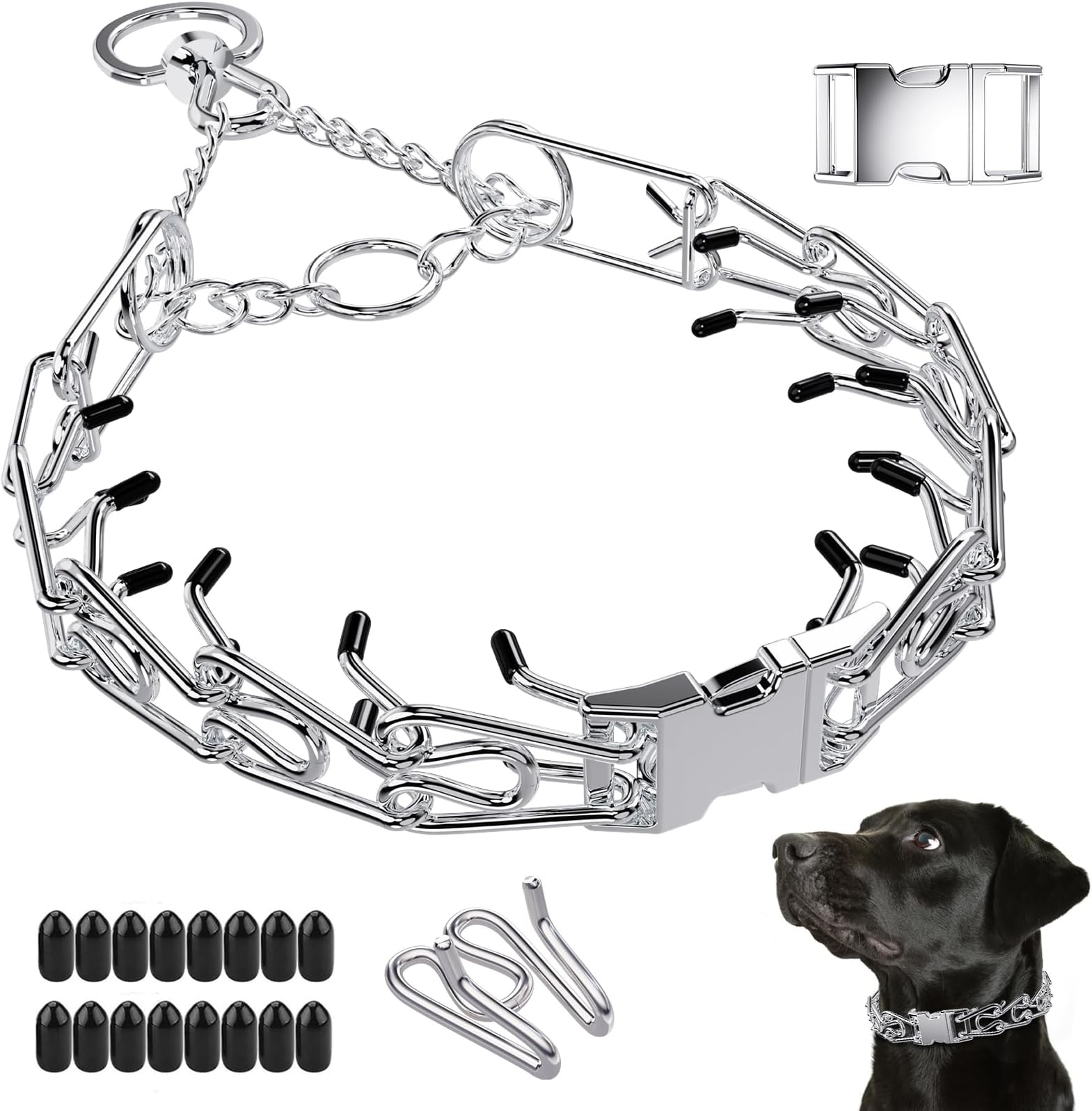
The material of the prong collar directly impacts its durability, weight, and appearance. Most high-quality prong collars are constructed from:
- Stainless Steel: This is the gold standard for prong collars. It’s rust-resistant, incredibly strong, and hypoallergenic for most dogs. While more expensive, it offers the best longevity and is less likely to cause skin irritation.
- Chrome-Plated Steel: A more budget-friendly option, chrome plating can be durable but may eventually chip or wear off, exposing the underlying steel to rust. It’s essential to inspect it regularly for signs of wear.
- Other Alloys: Some collars may use other metal alloys. It’s always advisable to research the specific alloy and its properties.
Case Study Example: Sarah, a proud owner of a spirited German Shepherd named Max, struggled with Max’s persistent pulling. After exhausting gentler methods without significant success, she consulted a certified professional dog trainer who recommended a stainless steel prong collar with a buckle. The trainer emphasized the importance of the material’s durability for a strong dog like Max. Within weeks of consistent, correct use, Sarah witnessed a dramatic improvement in Max’s leash manners.
2. Prong Size and Length: Precision is Paramount

The size and length of the prongs are crucial for effective and humane communication. Prongs that are too short will not provide sufficient correction, while those that are too long can be uncomfortable or even injurious.
- Prong Length: For most dogs, prongs between 2.5 and 3.5 inches are standard. However, for very large or thick-necked breeds, longer prongs might be necessary. Conversely, smaller breeds may require shorter prongs. Always err on the side of caution and start with a moderate length.
- Prong Thickness: Thicker prongs are generally more durable and may provide a slightly gentler, broader pressure. Thinner prongs can offer a more precise, sharper correction. This is often a matter of personal preference and handler sensitivity.
Statistic Insight: A study examining the impact of training equipment found that the effectiveness of prong collars is highly correlated with the correct fitting. Ill-fitting collars, regardless of their type, often lead to negative outcomes, including increased anxiety or aggression in the dog.
3. Collar Size and Adjustability: The Perfect Fit

A properly fitted prong collar should sit snugly just below the dog’s jawline, not on their windpipe. It should be tight enough that it cannot slip over their head but loose enough to allow for one or two fingers to fit comfortably between the collar and the dog’s neck when the prongs are not engaged.
- Neck Circumference Measurement: Always measure your dog’s neck circumference at the point where the collar will sit.
- Collar Length: Most buckle prong collars come with a specific length range. Ensure the collar you choose can accommodate your dog’s neck measurement within that range.
- Link Adjustment: Look for collars that allow for easy addition or removal of links to fine-tune the fit. Many buckle prong collars offer a limited number of removable links.
Example Scenario: Consider a Labrador Retriever with a thick neck versus a slender Greyhound. The same prong collar size would not be appropriate for both. The Labrador would likely require a larger collar with potentially longer prongs, while the Greyhound would need a smaller, more refined fit.
4. Buckle Mechanism: Security and Ease

The buckle itself is a critical component. Look for:
- Sturdy Construction: The buckle should be made of a strong material, similar to the collar itself, and should feel robust and secure.
- Secure Latching: Ensure the buckle latches securely and doesn’t easily pop open. Some buckles have a secondary locking mechanism for added peace of mind.
- Ease of Operation: The buckle should be easy for you to operate but difficult for your dog to accidentally release.
5. Brand Reputation and Reviews: Learning from Others
When investing in a training tool, it’s wise to choose a reputable brand known for quality and ethical manufacturing. Read reviews from other dog owners, paying attention to comments on:
- Durability
- Buckle security
- Comfort for the dog
- Effectiveness in training
- Customer service
Brands like Herm Sprenger, known for their German engineering and quality materials, are often recommended by professional trainers. However, there are other good options available on the market.
When to Consider a Prong Collar and When to Seek Alternatives
Prong collars are not a one-size-fits-all solution. They are generally most effective for:
- Addressing severe pulling on leash, especially in strong or energetic dogs.
- Managing leash reactivity, such as lunging or barking at other dogs or people.
- Reinforcing obedience commands when other methods have been insufficient.
- Dogs with specific prey drives that need consistent redirection.
However, they are generally **not** recommended for:
- Puppies or young dogs still developing their skeletal structure.
- Dogs with existing neck injuries or respiratory issues.
- Dogs with fear-based aggression or anxiety, as a prong collar could exacerbate these issues if not used by an experienced professional.
- Beginner dog owners who lack proper understanding of dog behavior and positive reinforcement techniques.
- As a substitute for consistent training and socialization.
If your dog exhibits fear, anxiety, or extreme aggression, it is imperative to consult with a veterinarian or a certified applied animal behaviorist. They can help identify the root cause of the behavior and recommend appropriate, humane, and safe training strategies.
The Importance of Professional Guidance

Even with the best-chosen prong collar, improper use can be detrimental. It is highly recommended to work with a certified professional dog trainer (CPDT-KA, KPA CTP, etc.) who is experienced with prong collars. They can:
- Assess your dog’s needs and temperament.
- Demonstrate proper fitting and adjustment techniques.
- Guide you on the correct application of the collar during training.
- Help you implement positive reinforcement alongside the prong collar for a balanced approach.
- Troubleshoot any issues that may arise.
A trainer can ensure that the prong collar is used as a communication tool, not as a punitive device, fostering a stronger bond between you and your dog.
Empowering Responsible Ownership

Choosing the right prong collar with a buckle for your dog is a decision that requires careful consideration, research, and a commitment to humane training practices. By understanding the function of the tool, prioritizing material and construction, ensuring a precise fit, and seeking professional guidance, you can harness the potential of a prong collar to achieve your training goals effectively and ethically. Remember, the ultimate aim is to build a well-behaved, confident, and happy companion, and the right training tools, used correctly, are invaluable allies on that journey.
